
Last updated November 23, 2026
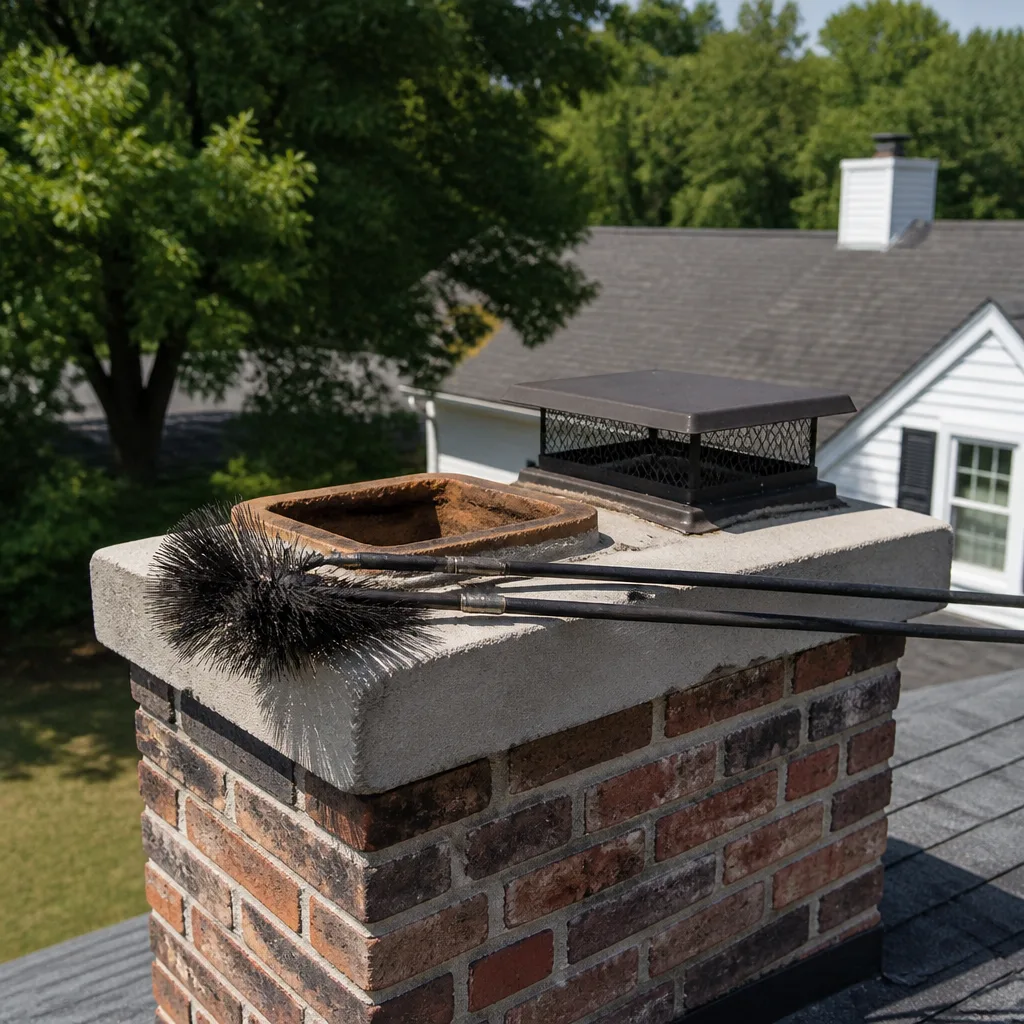 Sweep & inspection
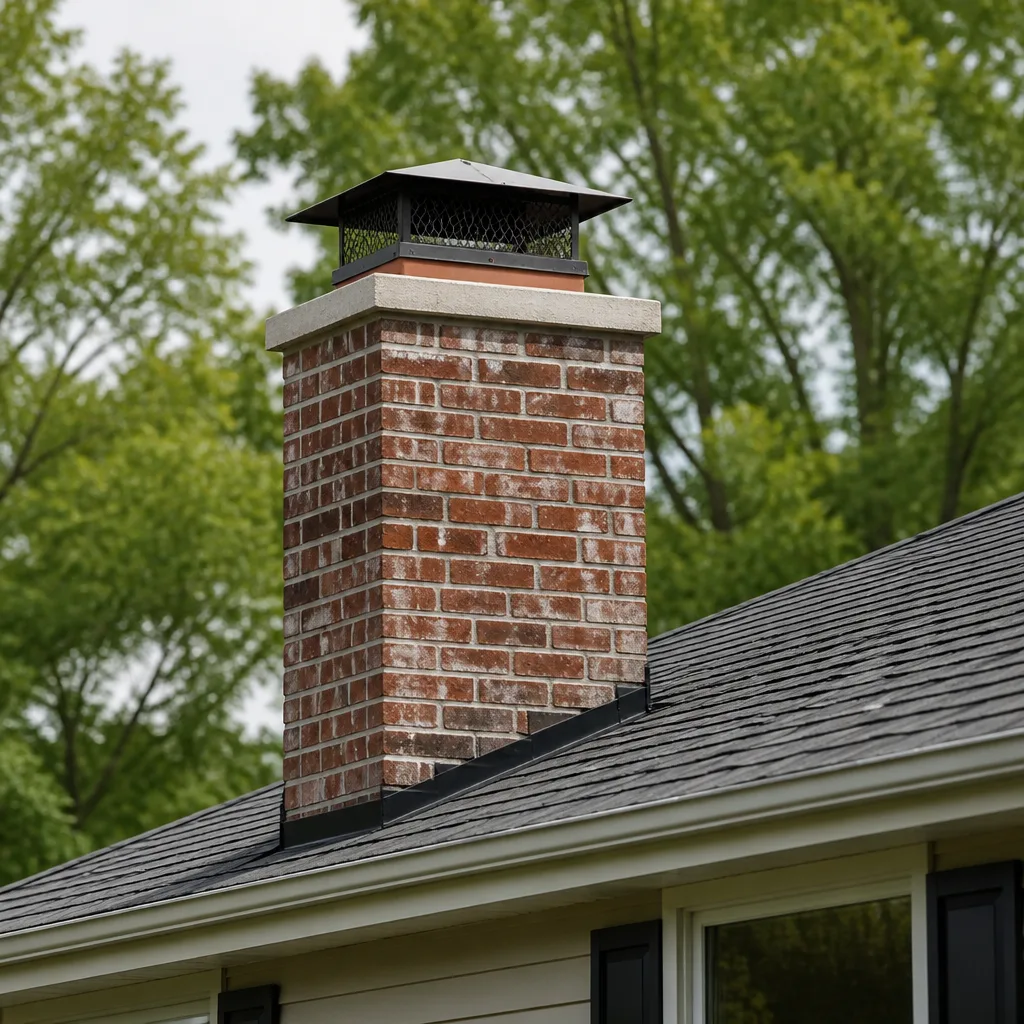 Caps & crowns
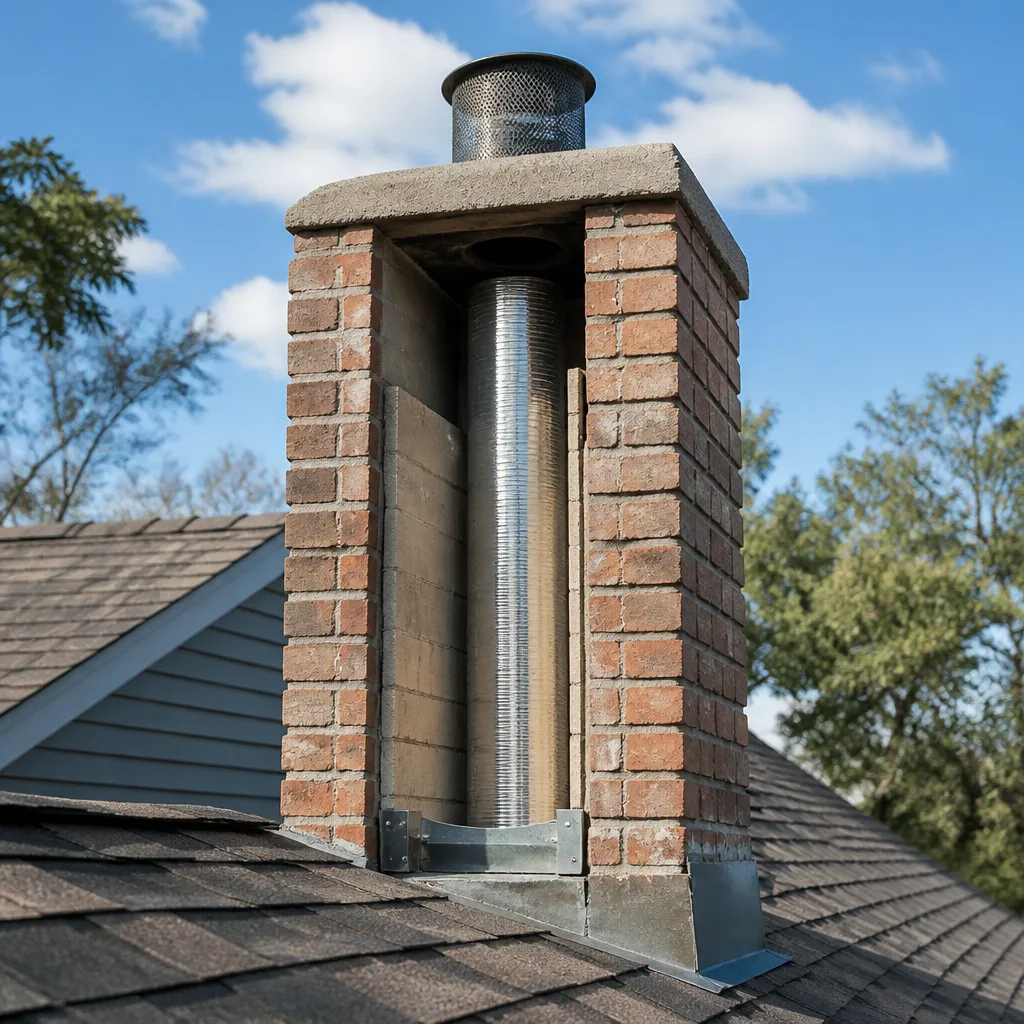 Flue relining
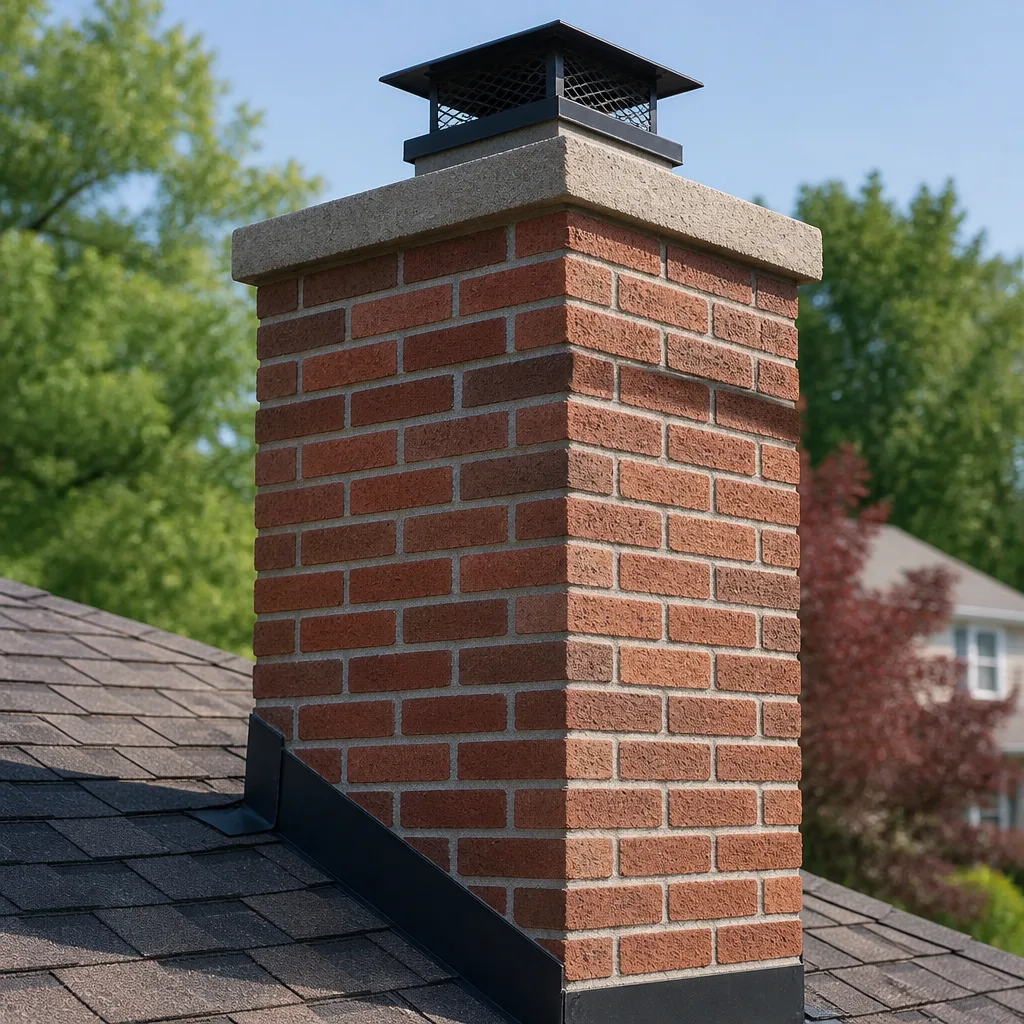 Masonry repair
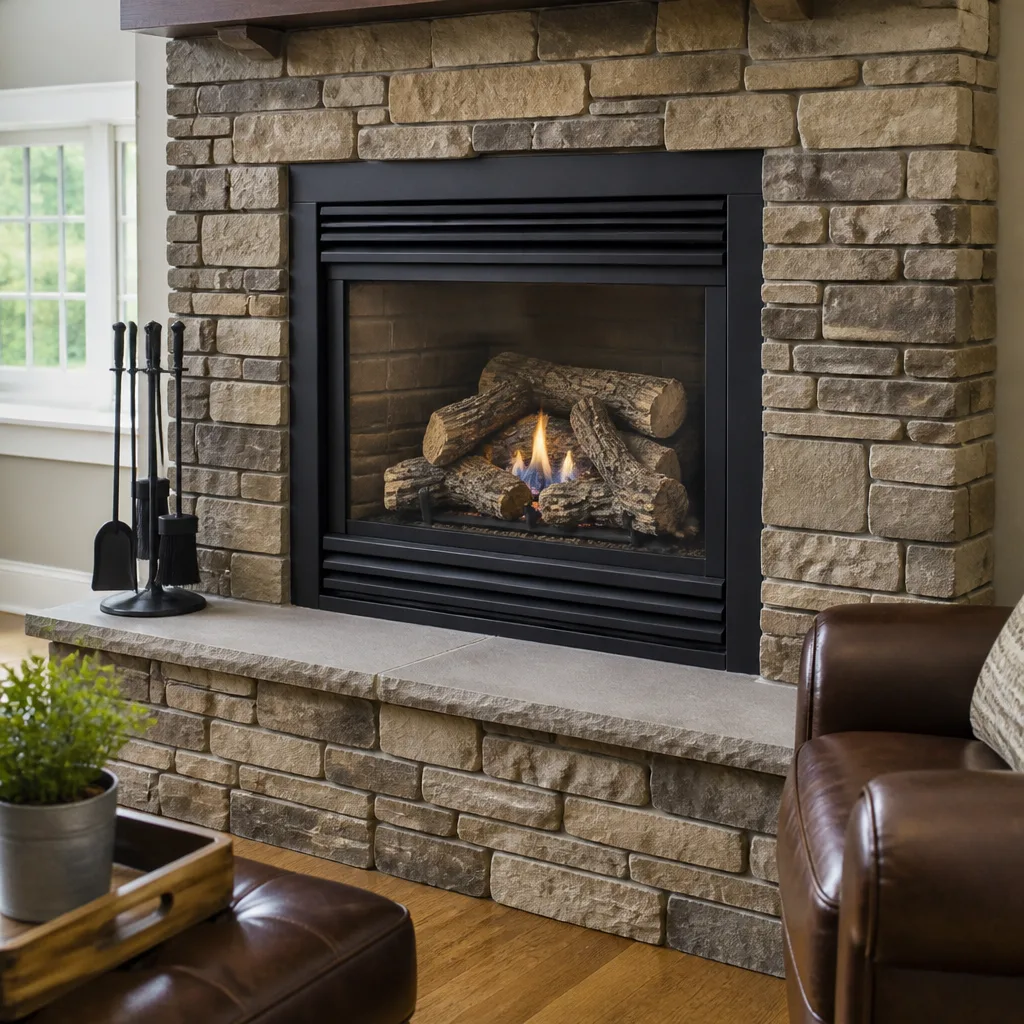 Gas fireplace service
Level 1 sweep and inspection to the NFPA 211 annual standard - flue, crown, cap, and flashing checked and photographed
Chimney sweep logs do not sweep chimneys. They loosen some creosote - which then falls where a brush and vacuum still have to collect it.
Chimney Sweep Maintenance Checklist for Lakewood Homeowners
The number one maintenance mistake we see in Lakewood isn’t skipping the sweep. It’s what happens after the sweep, when the brush comes out and the visit ends. The cleaning exposes the early-stage damage – a hairline crack in the crown, a puff of mortar dust at a joint, a damper that no longer seats – and then nobody looks at it. A sweep clears the flue; the checklist that follows is what keeps the whole system standing. In this guide you’ll learn what to check in every season here, the five components most homeowners never inspect, and which items you can verify with a flashlight yourself and which need a professional camera.
Quick Answer
A year-round chimney maintenance checklist in Lakewood should cover five things: annual professional sweeping and inspection, monthly homeowner visual checks of the crown, flashing, and damper seal, mortar joint inspection after every freeze-thaw cycle, cap and crown condition before wildfire smoke season, and a professional camera inspection of the smoke chamber before the first burn. Lakewood sits in a freeze-thaw climate at elevation, so the calendar here runs on frost dates and wind events, not a generic spring-and-fall schedule.
Styles & brands we work with
- Sweep & inspection
- Caps & crowns
- Flue relining
- Masonry repair
- Gas fireplace service
Table of Contents
- The Lakewood Chimney Maintenance Calendar
- The Five Components Homeowners Never Check
- What Freeze-Thaw Does to Mortar and Crowns
- Your Between-Visit Visual Inspection
- Flashlight vs. Camera: What You Can Check Yourself
- Wildfire Smoke Season and Your Chimney
- Keeping Your Inspection Records Straight
- What Maintenance Costs in Lakewood
The Lakewood Chimney Maintenance Calendar
Most chimney checklists tell you to sweep in fall and inspect in spring. That advice was written for a mild climate. Lakewood sits against the Front Range foothills, where the freeze-thaw line runs deep, wind comes off the foothills in gusts that strip caps and lift shingles, and wildfire smoke can settle in the valley for weeks. Our calendar runs on those local seasons instead.
Here’s how the year actually breaks down for a Lakewood chimney:
- January and February – peak burn season. Check the firebox weekly and watch for smoke rolling back into the room. That’s the first sign a flue is restricted or a damper is out of adjustment.
- March – last burns. This is the month to sweep the flue before creosote has all summer to cure into a hard glaze that brushes won’t touch.
- April and May – freeze-thaw damage season. As overnight frosts release, the cracks opened over winter become visible. Inspect the crown and mortar joints now, before the summer heat drives water deeper into them.
- June – the ideal month for a professional inspection. No fire risk, easy access to the roof, and time to schedule repairs before fall bookings fill up.
- July and August – repair window. Crown resurfacing, cap installation, flashing work, and any liner restoration should happen now so materials cure fully before the first cold snap.
- September – wildfire smoke season overlaps the start of burn season. Confirm your cap screen is intact so embers and ash don’t drop into dry nesting material near the flue top.
- October through December – the burn season itself. Monthly homeowner checks, and a professional sweep once you’ve burned through a cord of wood.
This is the calendar we run a chimney sweep against in Lakewood. It’s tied to what the weather does here, not the calendar on a corporate checklist. If you only remember two dates, make them March and September.
The Five Components Homeowners Never Check
A brush sweep cleans the flue. It does not clean the smoke chamber, and it doesn’t inspect anything. The five parts of a chimney that cause the most expensive repairs are the ones that sit above and behind the firebox, out of the sightline from the hearth. They’re also the parts that most maintenance checklists skip.
1. The smoke chamber. Above the damper and below the flue, the smoke chamber corbels inward. Those stepped walls collect creosote and ash in a way a round brush can’t reach. Over time the surface roughens, and the rough surface catches sparks. This is why a camera inspection matters – it’s the only way to see inside.
2. The smoke shelf. Directly beneath the smoke chamber sits a flat ledge that redirects downdrafts back up the flue. Ash settles on it, and when it fills, smoke reverses into the room instead of climbing. A flashlight from the firebox won’t show it. A camera does.
3. The damper seal. The damper plate must close flush to seal the flue when the fireplace isn’t burning. A warped or pitted plate leaks heated indoor air up the chimney all winter. A simple dollar-bill test (close the damper on a bill and pull gently) tells you if the seal is tight. If the bill slides out without effort, the seal is worn.
4. The crown. The concrete cap at the top of the masonry. Its job is to shed water off the whole stack. Most Lakewood crowns are cast flat or with a shallow slope, and freeze-thaw cycles open hairline cracks in the top surface within a few winters. A cracked crown lets water into the masonry below, which is where the real repair costs start.
5. The flashing. The metal where the chimney meets the roof. It’s the least-visible joint on the whole system and the first leak point. Damaged flashing shows up as a water stain on the ceiling near the chimney chase, not on the chimney itself. If you have a stain, check the flashing before you assume the roof is bad.
You can check the damper seal yourself. The other four need either a ladder and a trained eye or a camera. If any of them turns up a problem, our fireplace repair work covers the firebox-and-damper side, and a full inspection covers the chamber and crown.
What Freeze-Thaw Does to Mortar and Crowns
Freeze-thaw is the single biggest driver of chimney damage in Lakewood, and it’s the checklist item most homeowners get wrong. Here’s what actually happens, because the mechanism explains why timing matters.
Mortar joints and concrete crowns are porous. On a mild daytime they take on water. When the temperature drops below freezing overnight, that water expands as it turns to ice, and the expansion pushes against the pore walls. When it thaws, the mortar shrinks back – but never quite all the way. Over one winter, a mortar joint loses a little of its structural integrity each cycle. Over several, a hairline becomes a spalled joint, and a spalled joint lets water into the brick behind it.
The cold here is not the problem. It’s the cycling. Lakewood gets repeated freeze-thaw swings through late fall, all winter, and early spring, often many in a single month. That’s a much harder pattern on masonry than a place that stays frozen for three months straight.
The checklist item that catches it early: inspect the crown and the exposed mortar joints in April and again in October. Look for three things:
- Hairline cracks in the crown surface – the earliest sign the freeze-thaw loop has started.
- Mortar that has receded behind the brick face, leaving the bricks proud – that’s called recessed or raked mortar and it’s the stage before spalling.
- White or pale dust on the masonry surface – efflorescence, mineral salts pushed out as moisture migrates through the wall. It’s a moisture signal, not a cosmetic stain.
If you catch the crack at the hairline stage, resealing the crown or repointing the joint is a small job. If you catch it after mortar has fallen away and bricks are loose, it becomes a rebuild. The repair approach matters too. Our team works with HeatShield for ceramic resurfacing of damaged flue interiors and Gelco for crown restoration materials – we specify the right product for the repair rather than the generic mix from the supply house. The point is that the spring and fall inspection is what turns a rebuild into a reseal.
Your Between-Visit Visual Inspection
You can absolutely keep a trained eye on your own chimney between professional visits, and doing so makes your next inspection more useful, not less. What you can’t do is a full diagnostic. The line between “helpful observation” and “hidden damage missed” runs through the smoke chamber, the flashing, and the flue interior above the damper.
Here’s the between-visit check we recommend to homeowners. It takes about ten minutes and a flashlight.
- Look up the flue from the firebox with your flashlight. You should see the inside surfaces of the flue and daylight at the top if the cap screen has open mesh. If you see heavy, glossy black buildup, that’s glaze – and it doesn’t come off with a brush. Stop burning and call a professional.
- Check the damper with a dollar bill. Close it on the bill and pull gently. If it slides out easily, the seal is worn and you’re losing heat all winter.
- Look at the firebox. Cracked firebrick, gaps between bricks, or a crumbling firebox floor are structural, not cosmetic. Stop using the fireplace and call for an inspection.
- Check the smoke shelf for ash accumulation. If you can see a ledge just above the damper, a buildup of ash on it needs professional removal.
- Walk outside and look at the crown. Binoculars work fine. Check for cracks, missing chunks, rust stains, or a sagging profile.
- Look at the flashing where the chimney meets the roof. You’re looking for lifted edges, rust, or a gap between metal and shingle.
- Check the cap screen from the ground. A torn screen lets birds and embers in. A clogged screen restricts draft.
- Smell the firebox on a cold morning with no fire. A sharp creosote smell is a sign of glaze buildup or a downdraft issue. Call it in.
What none of this does is inspect the flue interior above the damper, the smoke chamber walls, or the flashing from the roof side. Those need a camera and a trained eye. That’s not a gap in your skill – it’s a gap in the tool.
Flashlight vs. Camera: What You Can Check Yourself
The most useful distinction in chimney maintenance is what you can verify yourself versus what needs professional equipment. Most homeowners can find 60 percent of the problems with a flashlight. The other 40 percent require a camera, and that 40 percent is where the expensive repairs hide.
What you can check with a flashlight:
- Firebox condition (cracks, gaps, crumbling floor)
- Damper operation and seal
- Visible ash buildup on the smoke shelf
- Crown condition from the ground or with binoculars
- Flashing from a safe ground-level or window view
- Cap screen condition
- Lower flue visibility (the section you can actually see from the firebox)
What requires a professional camera:
- Smoke chamber condition and the collar at the top of the firebox
- The full flue interior above the damper
- Any offset, bend, or transition in the flue
- The top of the flue and the cap interior
- The flashing from the roof side, the side that actually fails
- Tile liner joints and any visible cracking
This is why we treat inspection as a standalone service. A Lakewood Chimney Sweep Co inspection is a diagnostic visit that includes a camera inspection and a photo report of what we find – not a sales pitch dressed up as a checkup. You see the pictures yourself before we recommend anything, and nothing gets recommended without camera evidence you can look at. If it can safely wait until spring, we’ll tell you that, too.
Technicians on our roster have up to 11 years of experience, and they’re trained to tell the difference between a repair that’s urgent and one that belongs on the next year’s list.
Wildfire Smoke Season and Your Chimney
Lakewood gets weeks every summer where the air smells of smoke from fires elsewhere on the Front Range. It’s a seasonal pressure on the chimney system that most checklists never mention, and it changes two things about maintenance here.
First, when smoke settles over a neighborhood, it deposits ash and fine particulate on the outside of the cap screen and through its mesh. A screen that was fine in June can be half-clogged by August. A restricted cap screen reduces draft, and reduced draft is what pushes smoke back into the room on the first cold burn of the season.
Second, wildfire smoke is a signal to rethink your cap and crown. A properly fitted cap with a tight screen keeps embers, ash, and wind-driven debris out of the flue. And the crown is what shelters the whole cap assembly. Our chimney cap & crown installation is a dedicated service because we think about the top of the chimney first, not last. A cap and crown that’s fitted and sealed from the top down protects the rest of the system all year.
What to check before September:
- Cap screen intact and clear of ash deposits
- Cap fitting tight to the flue tile, no gaps
- Crown surface uncracked and sealed
- No debris accumulation in the screen mesh
- Cap screen size matched to the flue opening – oversize screens let animals in, undersize screens choke draft
Cap and crown work also matters after wind events. The gusts that come off the foothills are strong enough to lift a poorly secured cap and to open the flashing seam. Checking the cap after a wind event is a simple, ten-minute habit that prevents a much bigger problem.
Keeping Your Inspection Records Straight
If you’ve ever read the fine print on a homeowner’s policy, you know the chimney is a specific exclusion that most people find out about at the wrong moment. Insurance companies treat chimney maintenance as the homeowner’s responsibility, and a professional inspection record is often what keeps a claim eligible. Keeping records does not void coverage. Missing records can make a claim harder to support.
What to keep:
- The written inspection report from each professional visit
- The photos from a camera inspection
- The sweep certificate and the date
- Any repair invoice, with the product specified (HeatShield, Gelco, DuraFlex, or similar)
A yearly professional inspection report is the clearest record you can hold. Keeping those reports together, in one folder or one email thread, also tells you something useful about the chimney over time: whether the cracks are progressing or holding, and whether you’re on a maintenance track or an aging-out track. If your chimney is passed by a sweep but flagged on the inspection report, keep both. The difference between the two documents is what matters when you talk to an insurer.
What Maintenance Costs in Lakewood
Maintenance costs break into the routine visit and the repair work the visit turns up. Here’s how the line items usually run for a typical Lakewood home. Every price is an estimate. The written estimate sets the final number.
| Service | Typical estimate | Notes |
|---|---|---|
| Chimney sweep | $180 – $340 | Depends on flue length and buildup depth |
| Inspection | $150 – $275 | Includes camera inspection and photo report |
| Fireplace repair (damper, firebox, gas valve) | $250 – $800 | Depends on parts required |
| Crown reseal or crack repair | $350 – $650 | Smaller when caught at the hairline stage |
| Crown rebuild | $800 – $1,600 | When the original crown has failed through |
| Cap installation | $200 – $600 | Depends on flue size and material |
| Liner restoration (HeatShield) | $1,800 – $4,500 | When the liner is cracked but structurally sound enough to resurface |
The single biggest cost driver is timing. A crown crack caught in April and resealed is a fraction of a rebuild. A liner caught before the tile cracks through can often be resurfaced with HeatShield ceramic rather than replaced with a new DuraFlex system. And catching either of those things is exactly what the April and October inspections are for.
A routine sweep plus inspection each year is the cheapest insurance you can buy on the whole system. The repair budget should be set aside for the year the checklist actually finds something.
Common Mistakes to Avoid
- Skipping the sweep on the assumption that a wood stove “cleans itself.” It doesn’t. A modern stove burns cleaner, but creosote still accumulates in the flue, especially at the transition from firebox to flue. Skipping the sweep in Lakewood means glaze building up through a hard freeze cycle.
- Sweeping in spring and inspecting nothing. The brush tells you the flue moved, not that the crown is sound. The inspection is what finds the roof-side problems before they become ceiling stains.
- Treating the July heat as a maintenance-free season. July and August are the ideal repair months here. Materials cure fully, roof access is safe, and any crack sealed in summer holds through the freeze cycles that begin in late fall.
- Ignoring efflorescence on the masonry. White, pale staining on the chimney brick is moisture moving through the wall. Washing it off removes the evidence and does nothing about the source.
- Replacing the cap without checking the crown. A new cap on a cracked crown still lets water into the masonry below. Cap and crown go together.
- Burning over the weekend after a flagged inspection and waiting until Monday to call. A flagged flue is a stop-use item. If it’s a weekend, call and we’ll book you into the next opening, Sunday through Friday, 7am to 7pm.
- Assuming a general handyman can handle the check. A generalist can paint a crown. He cannot inspect the smoke chamber or diagnose a draft reversal. The five service categories underneath a chimney sweep – sweep, inspection, fireplace repair, chimney repair, and cap and crown – each require their own tooling and their own training.
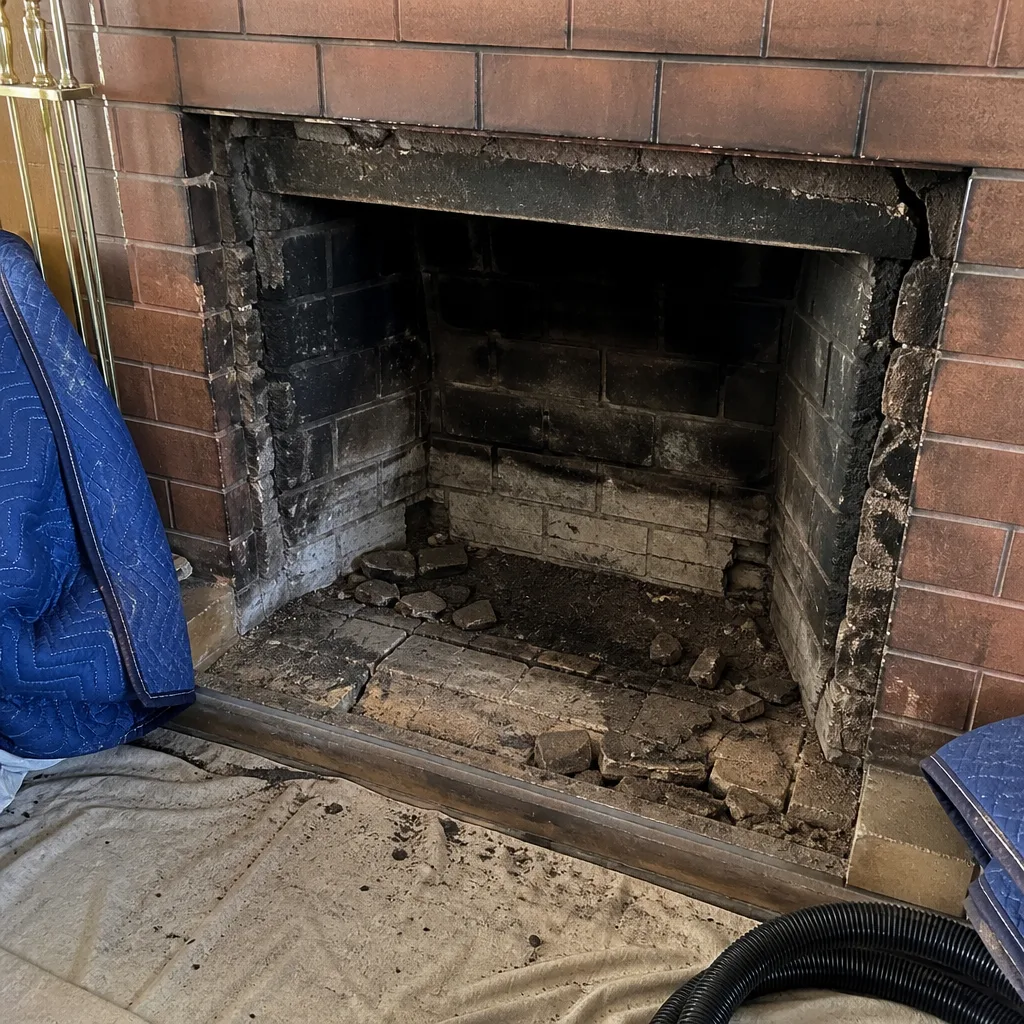
See the difference
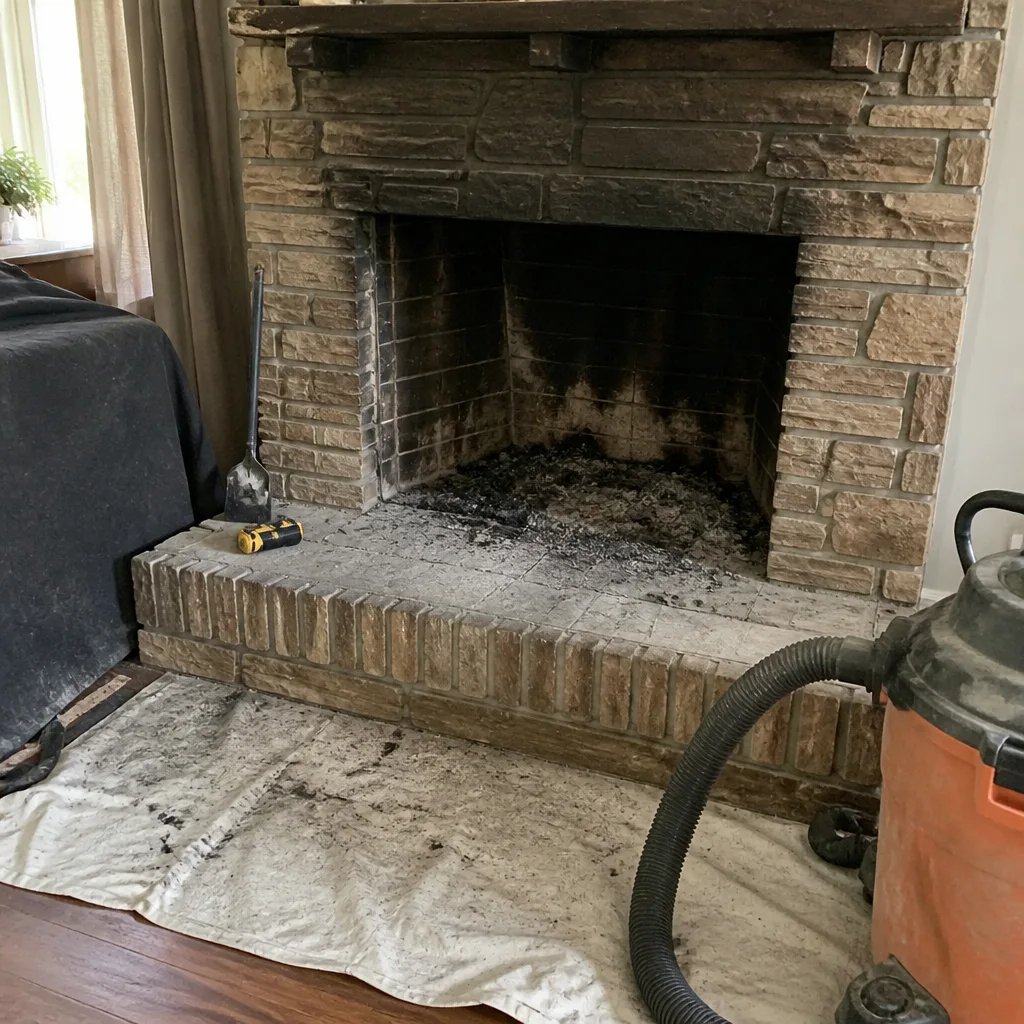 Before
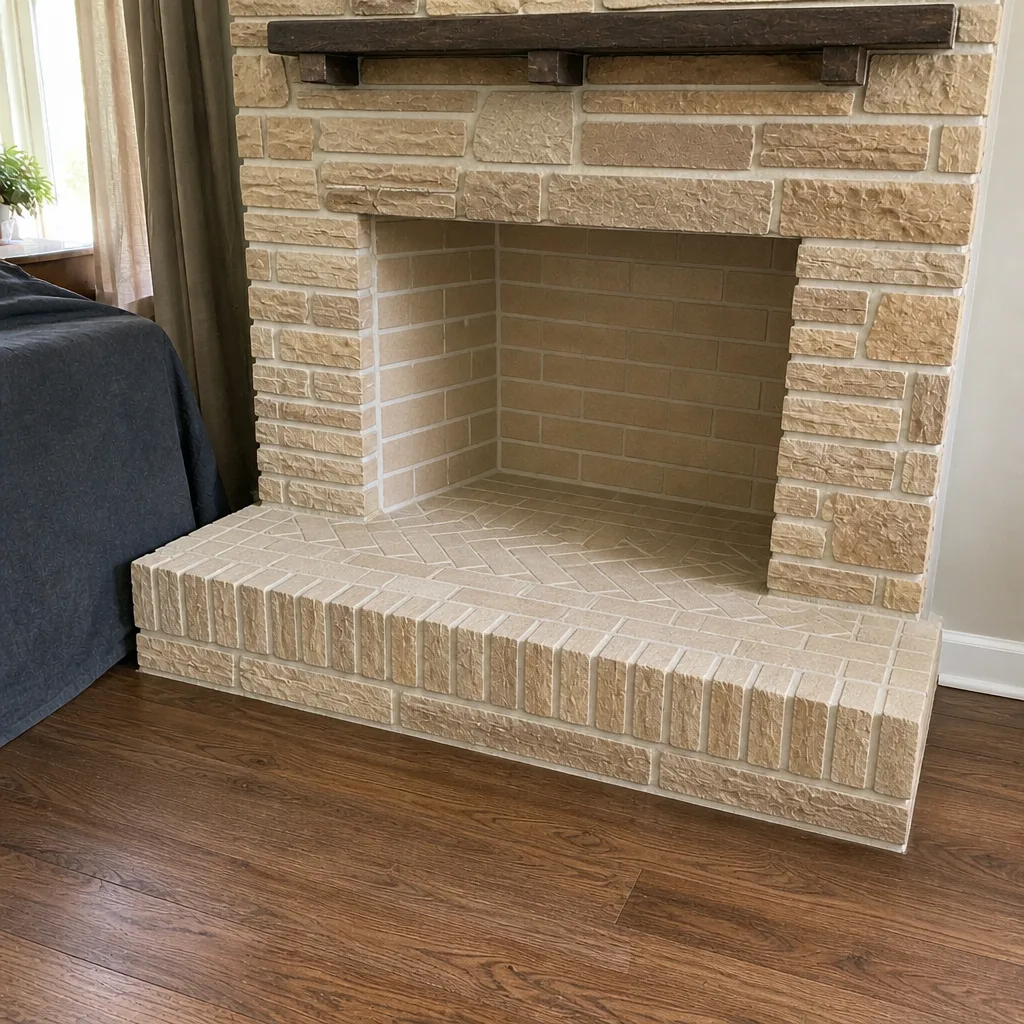 After
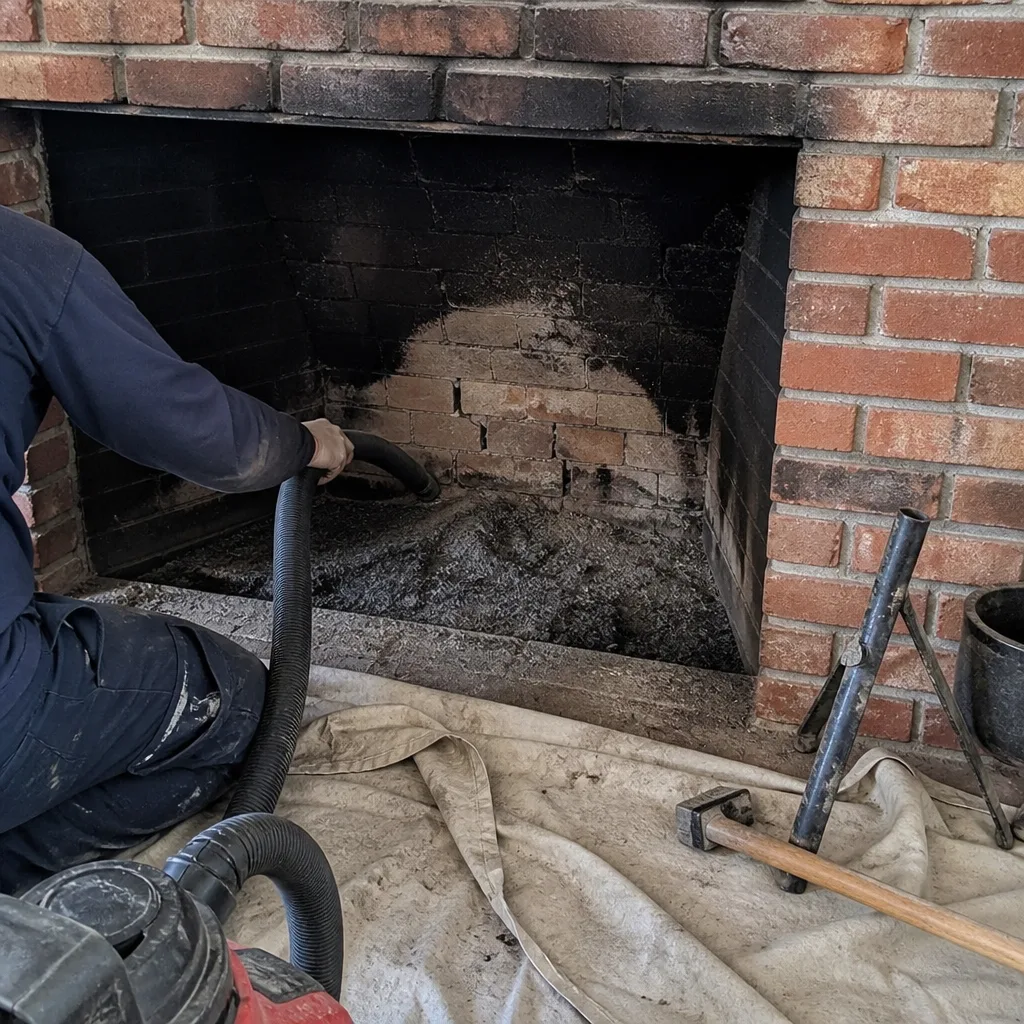 Before
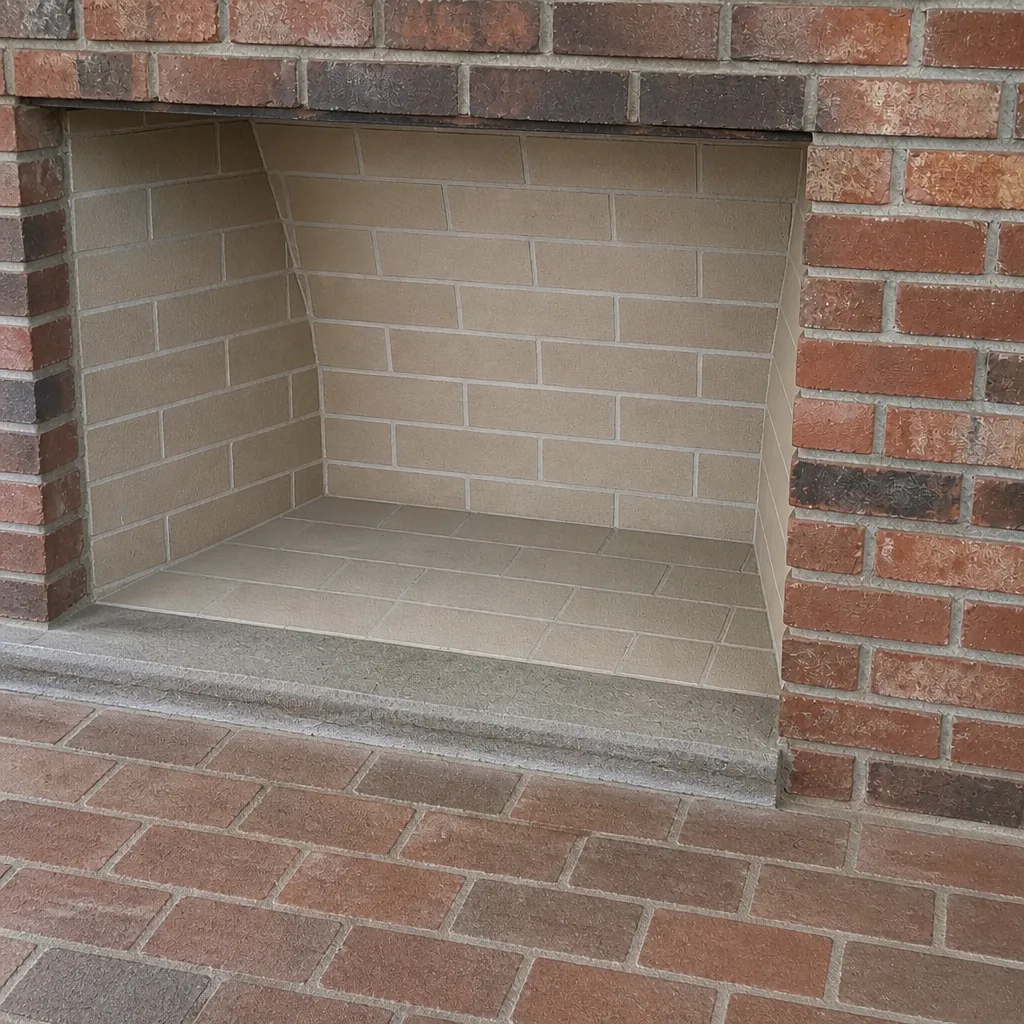 After
 Before
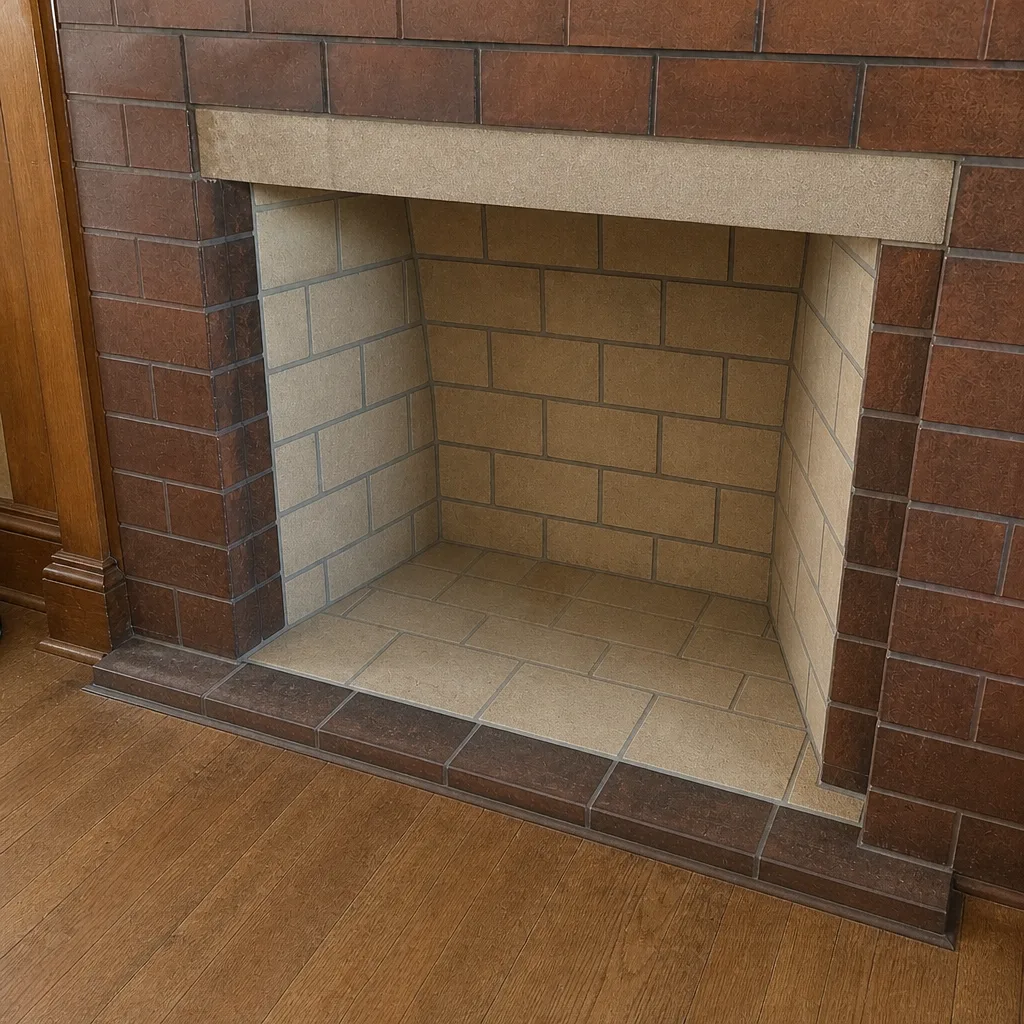 After
When to Call a Professional
Some checklist findings are homeowner calls. Others are stop-burning items. The line between them is not always obvious, so here’s how we’d draw it in Lakewood.
Call a professional immediately if you smell creosote on a cold morning with no fire burning, if the smoke reverses into the room on a cold start, if you see cracked firebrick in the firebox, if the damper no longer closes flush, or if you find a crack in the crown wider than a hairline. Stop using the fireplace until the chimney is inspected.
Call for a routine visit if it’s been a full burn season since your last sweep, if you’ve burned through a cord of wood, if you’ve noticed white staining on the exterior masonry, or if you want a camera inspection before your first burn of the year. Nothing is recommended without camera evidence you can see. If it’s a job that can wait until spring, we tell you so. Lakewood Chimney Sweep Co offers free estimates in Lakewood. Call (866) 937-7920.
Frequently Asked Questions
Once a year for a typical wood-burning fireplace, and more often if you burn heavily. The right moment in Lakewood is late winter or early spring, after the last burn and before creosote hardens through the summer. Gas fireplaces need an inspection every year or two but rarely need sweeping, since there’s no creosote. Call (866) 937-7920 for an exact quote on a sweep – estimates are free.
A sweep in Lakewood typically runs $180 – $340, depending on flue length and how much buildup is present. That’s the cleaning itself. An inspection is separate and usually runs $150 – $275, including a camera inspection and a photo report. The written estimate sets the final price. Call (866) 937-7920 for an exact quote – estimates are free.
No, not automatically – that’s the most common upsell in the trade, and it’s why we treat inspection as its own service. Many liner problems can be resolved with HeatShield ceramic resurfacing rather than full replacement with a new DuraFlex system. Either approach is only justified by camera evidence you can see. If you’re being told you need a liner and haven’t seen the pictures, ask to see them. Call (866) 937-7920 if you want a second opinion – estimates are free.
Two things, and they run on different timelines. Creosote accumulates in the flue with each burn, and at the glazed stage it’s a fuel that can ignite with a spark from a hot fire. Separately, the annual inspection is the only chance to catch mortar, crown, and flashing problems before the next freeze cycle widens them. Skipping the sweep skips the inspection too. Call (866) 937-7920 to book both – estimates are free.
Yes – a sweep and an inspection do different jobs. The sweep clears the flue. The inspection checks the smoke chamber, the crown, the flashing, the cap, and the liner joints, none of which the brush touches. The sweep can be clean and the crown still cracked. Book the inspection as a separate visit. Call (866) 937-7920 – estimates are free.
A cold chimney smelling of smoke is a sign of glaze buildup, a damaged smoke shelf, or a draft reversal. Stop using the fireplace and call for an inspection. In Lakewood that smell is more common on the first cold morning after a warm spell, because the temperature swing changes the pressure inside the flue. Call (866) 937-7920. We answer 24/7 and fast dispatch runs 7am to 7pm. A call outside dispatch hours is booked into the next opening, Sunday through Friday, 7am to 7pm.
Yes, and you should – the between-visit visual inspection is genuinely useful, and we encourage it. What you can’t do yourself is the camera inspection of the smoke chamber, the flue interior above the damper, or the roof-side view of the flashing. Follow the flashlight checklist in this guide, and leave the camera work to a professional visit. Call (866) 937-7920 – estimates are free.
The Bottom Line
The Lakewood chimney maintenance checklist comes down to five habits: sweep every year after the last burn, inspect the crown and mortar joints after every freeze-thaw season, run the flashlight check between professional visits, confirm the cap and screen before wildfire smoke season, and keep every inspection report and photo together. The order matters here because of how freeze-thaw works – catching a crown crack in April turns a rebuild into a reseal. The tooling matters too: a flashlight tells you half the story, and a camera tells you the rest. Our technicians have up to 11 years of experience with the freeze-thaw cycles, wind events, and smoke seasons that Lakewood chimneys actually face. A safe chimney isn’t a luxury – it’s the job.
If you want a single contractor for sweeping, inspection, fireplace repair, chimney repair, and cap and crown, that’s what we do. One call, every chimney service, from the firebox to the crown. Call Lakewood Chimney Sweep Co at (866) 937-7920 for a free estimate. We answer 24/7. Fast dispatch from 7am to 7pm, Sunday through Friday.
Written by the team at Lakewood Chimney Sweep Co.