
Last updated November 23, 2026
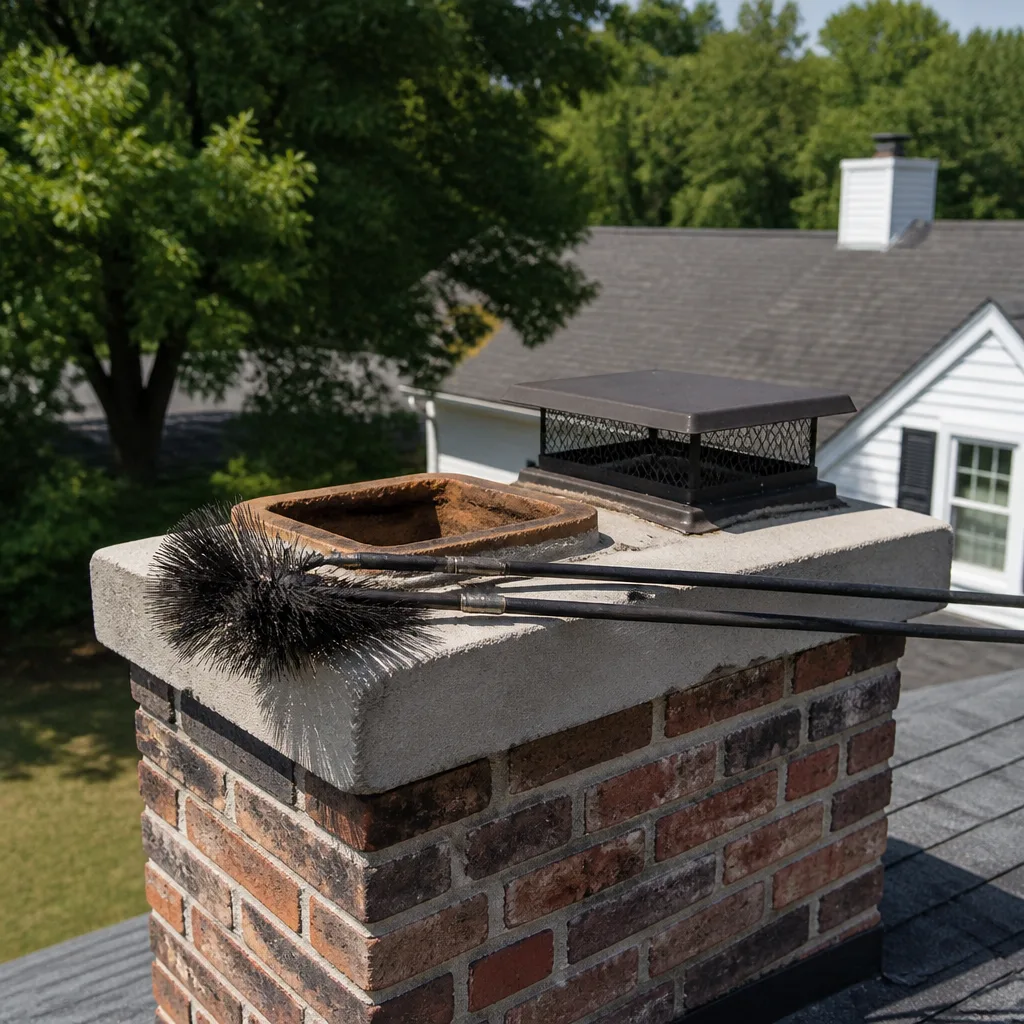 Sweep & inspection
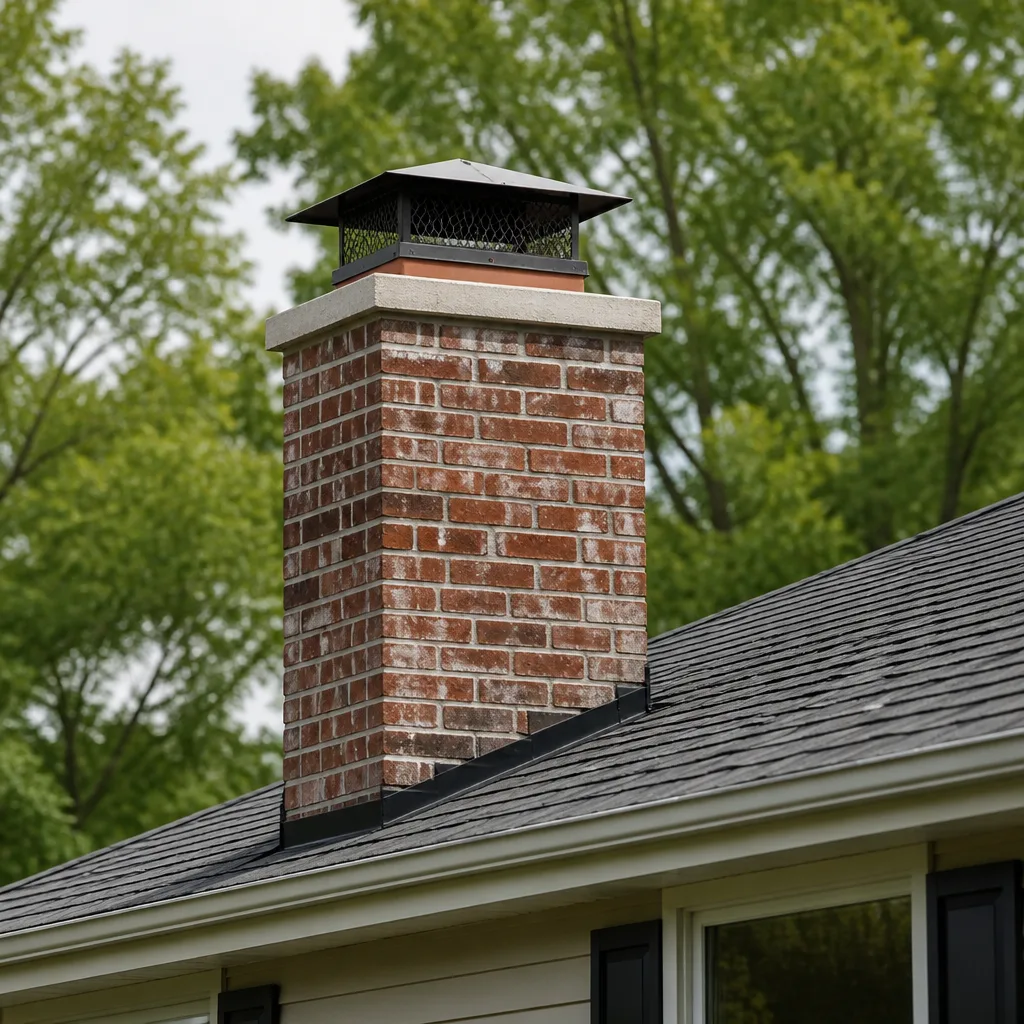 Caps & crowns
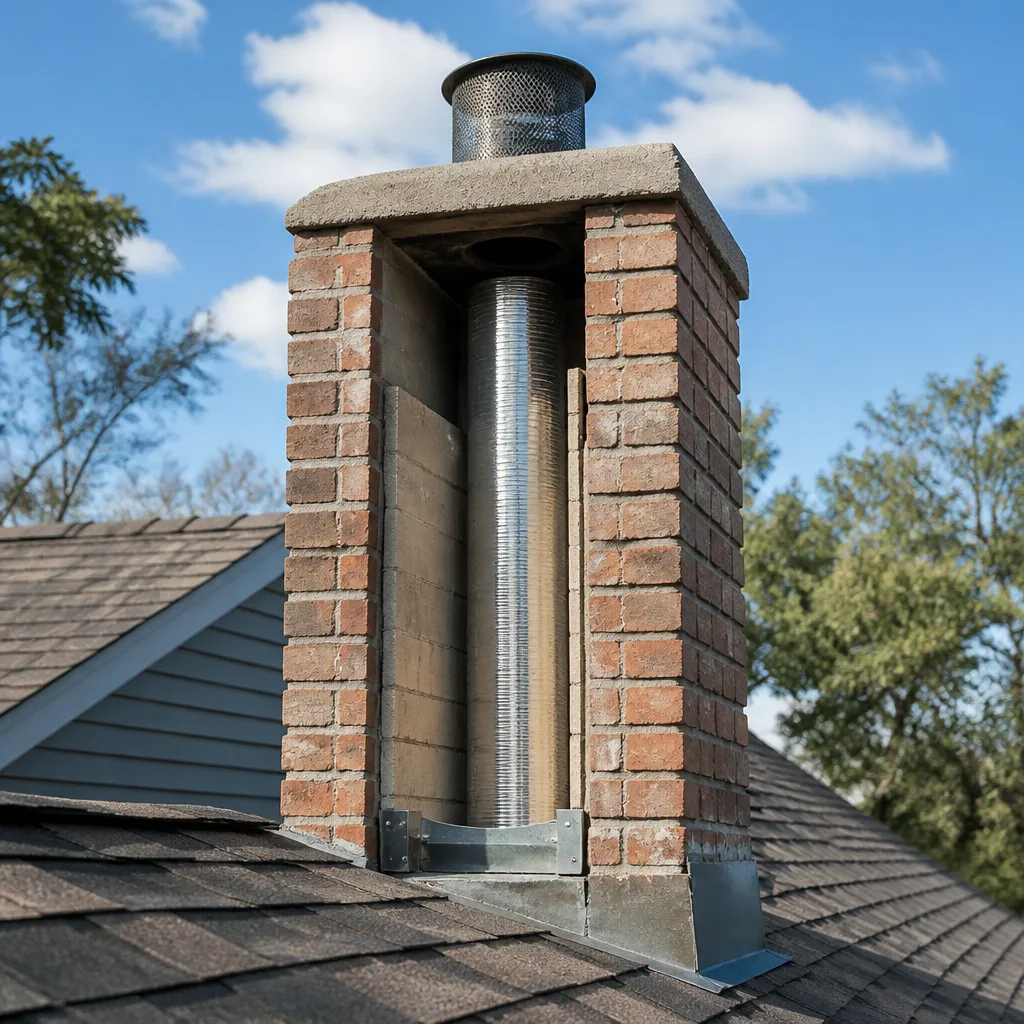 Flue relining
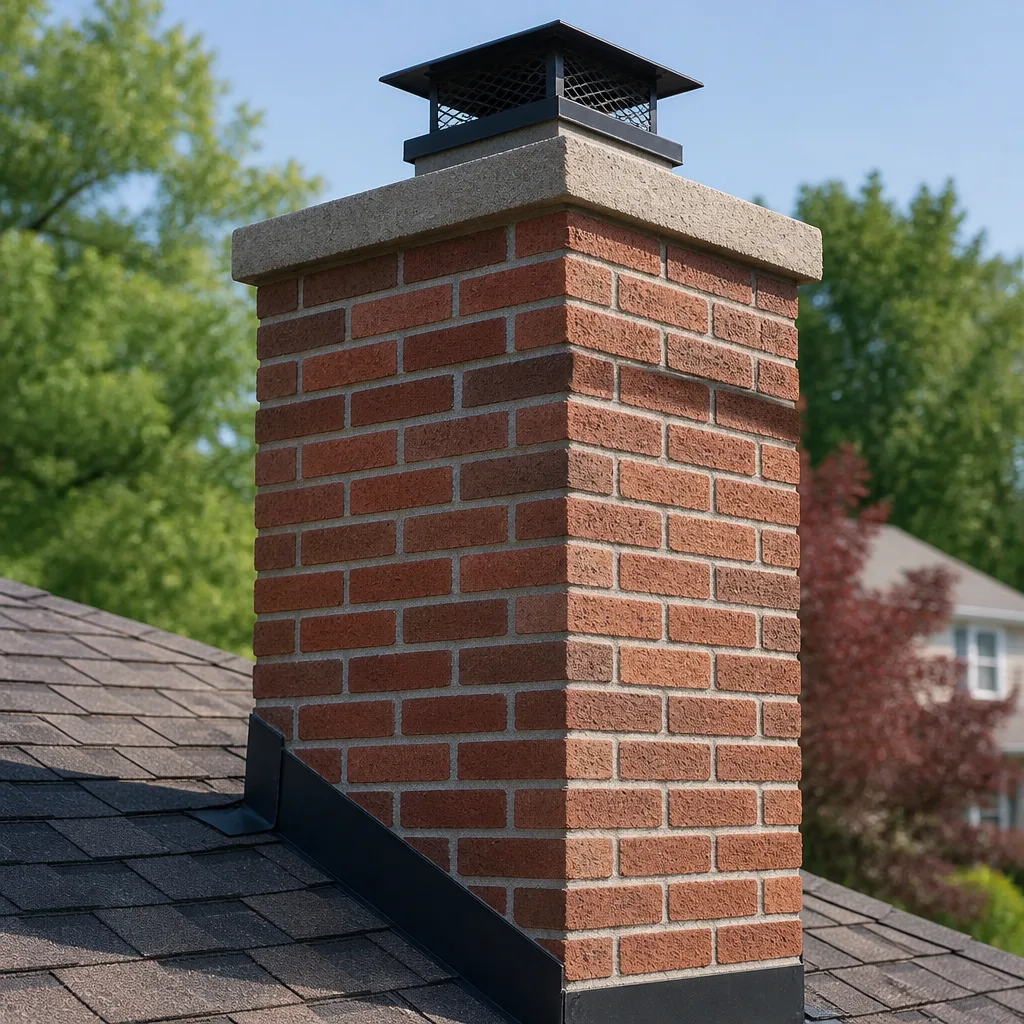 Masonry repair
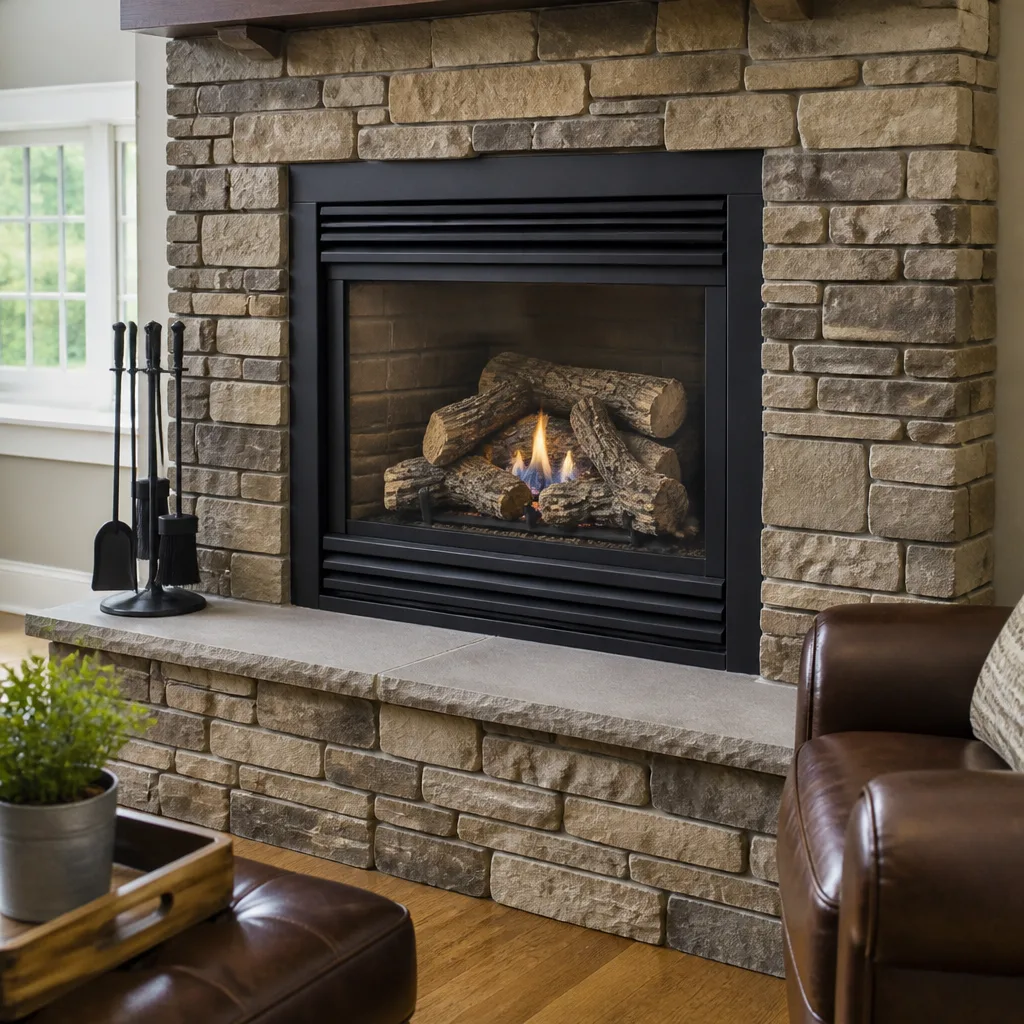 Gas fireplace service
Level 1 sweep and inspection to the NFPA 211 annual standard - flue, crown, cap, and flashing checked and photographed
Chimney sweep logs do not sweep chimneys. They loosen some creosote - which then falls where a brush and vacuum still have to collect it.
Chimney Cleaning Warning Signs: A Lakewood Homeowner’s Reference Guide
The most dangerous chimney condition we encounter in Lakewood doesn’t announce itself with a thicker plume of smoke or a stronger smell. Stage 3 glazed creosote, the hardened, tar-like deposit that fuels chimney fires, actually produces less smoke and less odor than a moderately dirty flue. That’s the trap. Homeowners with the most compromised chimneys are often the most surprised when we open the door, because nothing about the way the fireplace was behaving screamed “problem.” The warning signs are there, but they live in places people don’t habitually look: the back of the firebox, the top of the flue, the crown on the roof, the smell in an empty firebox in July. This guide names the specific visual, smell, performance, and exterior cues that tell you your Lakewood chimney needs attention now rather than next season. You’ll learn what each sign actually means, how urgent it is, and where the line sits between a cleaning and a repair.
Quick Answer
The main chimney cleaning warning signs are a strong campfire smell when no fire is burning, dark or glazed deposits on the flue walls, spalling or white-stained firebrick, a rusted or stiff damper, smoke rolling into the room, slow-starting fires, and exterior clues like efflorescence or a cracked crown. In Lakewood’s dry, high-desert climate, creosote cures hard and fast, so a chimney that was acceptable last season can be overdue this one. If you notice any two of these signs together, book an inspection before you light another fire.
Styles & brands we work with
- Sweep & inspection
- Caps & crowns
- Flue relining
- Masonry repair
- Gas fireplace service
Table of Contents
- The Smell Indicators: What a Summer Campfire Odor Really Means
- Visual Warning Signs Inside the Firebox
- Performance Warning Signs: Draft, Smoke, and Slow Starts
- Exterior Clues You Can See From the Ground
- When Cleaning Isn’t Enough: Repair and Inspection Thresholds
- Why Lakewood’s Climate Makes Timing Matter
- Common Mistakes to Avoid
- When to Call a Professional
The Smell Indicators: What a Summer Campfire Odor Really Means
If your firebox smells like a campfire in July, that’s a diagnostic signal, not a nuisance. A clean, properly drafting flue should smell close to nothing when it’s empty. When you catch that smoky, acrid odor on a warm day with no fire burning, it means creosote and soot are sitting on the flue walls in enough volume to off-gas, and the house is pulling that smell back down the chimney through pressure differences. The smell is the creosote talking.
Pay attention to when the smell shows up, because the timing narrows down the cause:
- Smell on hot, still days: the classic sign of accumulated creosote. Warm outdoor air is heavier relative to the cooler flue, so the chimney reverses and pushes the odor into the living space.
- Smell after rain or snowmelt: water is getting past the cap or crown and mixing with soot. That combination corrodes metal components and speeds up masonry damage.
- Smell that lingers in the room after a fire: weak draft or a partially blocked flue is letting exhaust spill back instead of carrying it up and out.
- Smell in a neighboring room or closet: the chimney is close to the structure and pulling air from conditioned space, which points to a pressure or sealing issue worth investigating.
Here in Lakewood, the smell test is especially useful because so many homes sit in neighborhoods with tight, modern envelopes. A house that’s well-sealed will pull harder on the chimney to replace air, which makes creosote odor more noticeable than it would be in a drafty older home. If the smell has been there for a full season, treat it as your first warning sign and get the flue looked at through a proper Lakewood Chimney Sweep Co inspection rather than assuming it’s harmless.
Visual Warning Signs Inside the Firebox
The firebox is the one part of the chimney system you can inspect without a ladder or a camera, and it tells you a lot. Spend five minutes with a flashlight before the burning season starts and look for these specific conditions. They’re ordered from least to most urgent.
- White, chalky staining on the firebox back wall. This is efflorescence, mineral salts pushed to the surface by moisture moving through the masonry. It means water has been migrating through the brick. On the firebox itself, it usually points to a moisture source above that you can’t see from the hearth.
- Spalling firebrick. Firebrick is meant to handle heat, but over time it can crack, flake, or crumble at the surface. Flaking firebrick exposes the mortar joints and structure behind it to heat they weren’t designed for. Small hairline cracks in the brick face are common and often not urgent; brick that’s crumbling or missing chunks at the corners is.
- Mortar joints that are recessed or crumbling. Run your finger along the joints between firebrick (with no fire, obviously). If the mortar is soft, sandy, or worn back more than a quarter inch, the firebox needs repointing before the gaps widen.
- A rusted damper. Rust in the firebox means chronic moisture. The damper is the first metal part to show it. A damper that won’t open fully, sticks, or has dropped out of its track is both a draft problem and a sign that water is getting in from above.
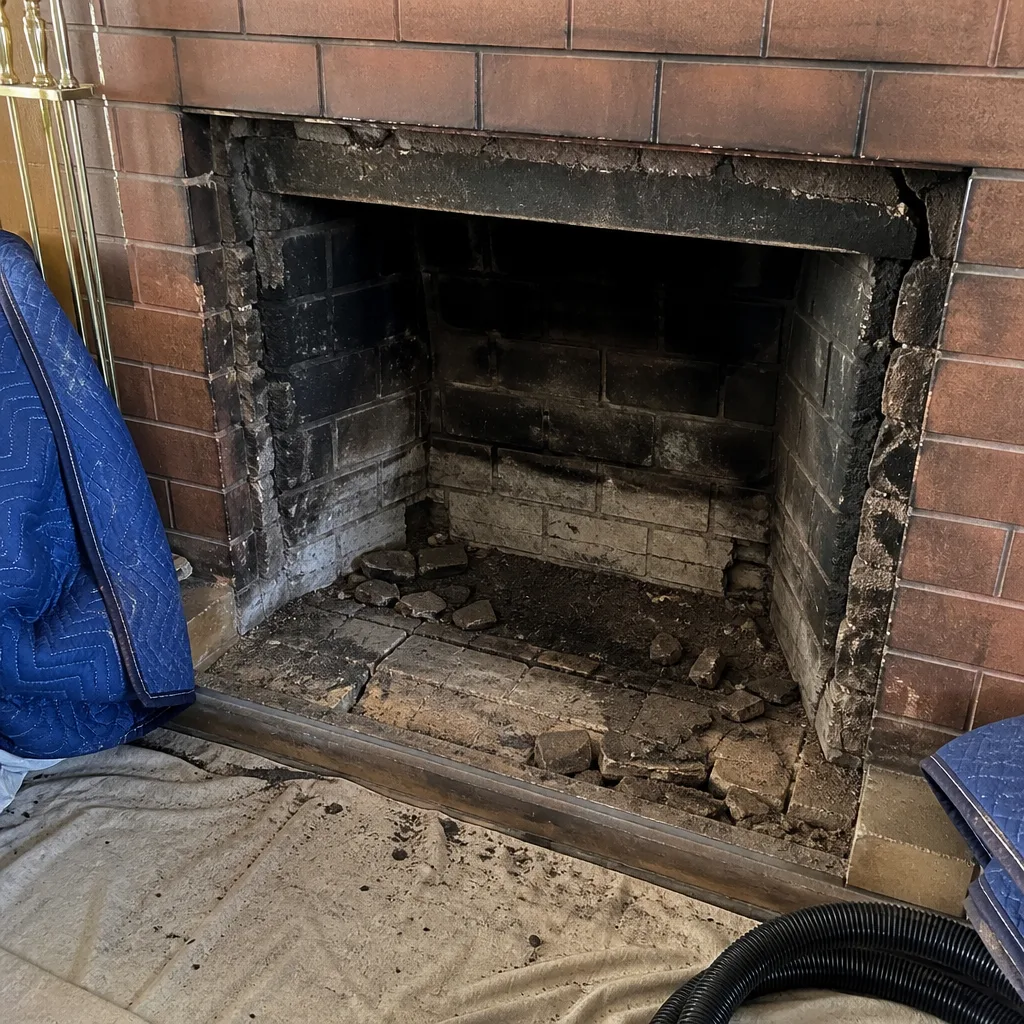
- Heavy soot or black, glassy patches on the firebox walls. Soot on the firebox is normal. Glossy, tar-like patches are not. That’s glazed creosote beginning to form at the source, and it’s the strongest single indicator that a cleaning is overdue.
- Loose or missing bricks in the firebox floor. Often the result of repeated moisture cycling. Don’t light a fire until it’s assessed, because the floor takes direct heat.
If you see signs one through three together, that’s a firebox worth photographing and showing a technician. Signs four and five suggest the flue above is likely in the same condition, and that’s when you move from a visual check to an actual inspection.
Performance Warning Signs: Draft, Smoke, and Slow Starts
Performance changes are the signs people live with longest, because they creep up gradually and get blamed on the wood. If you’ve been stacking “better wood” for two seasons trying to fix a smoking fireplace, the chimney is the more likely culprit. Here’s what each performance symptom usually points to.
Smoke rolling into the room
Some spillage at startup is normal in a cold flue. Smoke that keeps rolling back during a well-established fire means the flue isn’t pulling air fast enough. Causes range from a partially blocked flue (a nest, soot fall, or a collapsed liner section) to an undersized flue for the firebox opening, to a home that’s depressurized by exhaust fans or a tightly sealed envelope. In Lakewood, where new and renovated homes are tightly constructed, we see depressurization spillage more than you’d expect.
Slow-starting fires
A fire that takes forever to catch, sputters, or dies down despite dry wood and open air is fighting a sluggish draft. A creosote-lined flue loses its smooth interior profile, which slows air movement. Cold flues start slow, but a flue that got noticeably worse season over season is telling you the deposits have grown.
A smoky smell in the room after the fire’s out
This means exhaust is still leaking into the room after the burn. It points to a flue blockage, a gap in the liner, or a chimney that doesn’t extend high enough above the roofline for the local wind patterns.
Uneven burn and soot on the glass (gas fireplaces)
If you have a gas log set or direct-vent fireplace, soot staining on the glass or a flame that’s become more yellow than blue are service indicators. Gas fireplaces still need their venting and burners checked, even though there’s no creosote problem. That’s a fireplace repair job rather than a sweep.
Exterior Clues You Can See From the Ground
You don’t need a roof inspection to catch some of the most important warning signs. A pair of binoculars and a walk around the house will show you what the chimney looks like from below. These are the exterior clues in order of what they mean for urgency.
- White staining on exterior brick (efflorescence). Mineral deposits pushed out by moisture. On the exterior it’s cosmetic when it’s isolated; when it’s combined with interior white staining or crumbling mortar, it points to an active water intrusion path that’s worth tracking down.
- Spalling on exterior brick. Brick faces that are flaking off or leaving chips on the roof or ground. This is freeze-thaw damage, and Lakewood’s dramatic temperature swings between warm days and freezing nights in spring and fall make this a real source of masonry deterioration. Spalling brick needs repointing or rebuilding, not a cleaning.
- A cracked or flaking crown. The concrete cap at the very top of the chimney is designed to shed water away from the masonry. When it cracks, water runs into the chimney body instead of off it. A cracked crown is one of the most common causes of everything else on this page, which is why it belongs in its own lane. That’s the thinking behind our dedicated chimney cap & crown service: fix the top and you protect the rest.
- Missing or rusted spark arrestor and cap. A missing cap means rain, snow, birds, and squirrels have an open door into your flue. A rusted cap is no longer doing its job. This is one of the easiest fixes and one of the most impactful.
- Damaged flashing where the chimney meets the roof. Flashing is the metal that seals the joint between chimney and shingles. Lifted, cracked, or missing flashing lets water in during runoff and spring rain. It’s often easier to spot from the ground with a slight angle than you’d think.
- Dark streaks or stains on the exterior chimney face. These can indicate soot migration and water together, or a flue that’s been venting into the masonry. Worth a closer look.
Look during dry weather for staining and during or right after rain for active leaks. Both tell you different things. If you see the cracked crown combined with interior efflorescence, that’s the specific pairing that upgrades a cleaning visit into a chimney repair estimate.
When Cleaning Isn’t Enough: Repair and Inspection Thresholds
Not every warning sign calls for a sweep. Some tell you the chimney system has moved past cleaning into the repair or restoration stage, and knowing the difference keeps you from paying for the wrong thing. Here are the thresholds we use and why.
A cleaning resolves the issue when:
- The only sign is a moderate buildup of soot or Stage 1 creosote (dry, flaky, easily brushed off).
- Draft and burn performance were normal before the season.
- Firebox and exterior brick look intact.
- No smell was present in the off-season.
Inspection with a camera becomes necessary when:
- Any performance sign appears (smoke rollout, slow starts, room smell after the fire).
- Stage 2 creosote (hard, shiny, or with visible layers) has been found before.
- The chimney hasn’t been looked at in more than a year of regular use.
- You’ve had a chimney fire you weren’t sure was a chimney fire (a “popping” sound, a hot smell, or dark staining afterward).
A repair upgrade is likely when:
- Stage 3 glazed creosote is present. This is the hardened, tar-glazed deposit that doesn’t come off with a brush. It needs mechanical removal and, depending on condition, a ceramic resurfacing product like HeatShield to restore a sound flue interior. This is specialized work beyond a standard sweep.
- The flue liner is cracked, offset, or missing. A damaged terracotta liner has to be relined. We work with DuraFlex flexible liner systems and Olympia Chimney products for this kind of job, matching the liner to the chimney rather than defaulting to whatever’s on hand.
- The crown is cracked, flashing is loose, or the cap is failing. These are exterior repair items, and leaving them turns into interior problems over a couple of seasons.
- Firebox brick is spalling or mortar joints are recessed. That’s repair work, not cleaning.
If you’re not sure which category you’re in, that’s the reason a standalone inspection exists. Our chimney sweep in Lakewood comes with a camera inspection and photo report, so you can see the flue condition yourself rather than take someone’s word for it.
Why Lakewood’s Climate Makes Timing Matter
Chimney behavior depends heavily on local climate, and Lakewood has a pattern worth understanding. Dry air and frequent temperature swings create the conditions for creosote to cure harder than it would in a humid climate. When flue gases cool quickly against cold masonry, creosote condenses more readily, and the dry air then cures those deposits toward the hard, glazed stage instead of leaving them soft and brushable. That’s the mechanism behind our opening point: a Lakewood chimney can go from “it’s probably fine” to Stage 2 or Stage 3 creosote in fewer burning seasons than a coastal homeowner might expect.
Lakewood’s freeze-thaw cycles also drive the masonry side of the problem. Water that gets into a cracked crown or failed flashing expands overnight when temperatures drop below freezing, then contracts during the day. That cycling spreads cracks, loosens mortar joints, and spalls brick. Neighborhoods with a mix of older brick chimneys and newer construction see both sides of this: older chimneys suffering moisture penetration, newer ones dealing with tight-envelope depressurization and draft problems.
The practical rule for a Lakewood homeowner is to inspect and clean in the shoulder season, before the burning season starts. Creosote that builds over a winter sits there through the dry summer, curing harder, and by fall it’s a bigger job than it would have been. If your chimney is overdue, the best time to address it is before you’re relying on it.
Common Mistakes to Avoid
- Waiting for a bigger sign. The most dangerous conditions are the quietest ones. A campfire smell in summer is a complete warning sign on its own, even if the fire burned fine all winter.
- Treating a smell or soot as cosmetic. Soot on the firebox is normal; glazed patches and off-season odor are not cosmetics, they’re indicators of what’s built up in the flue.
- Blaming the wood first. If performance got worse and you’ve been trying different wood for two seasons, the flue is the likelier story. Chasing a draft problem through the wood pile wastes money and leaves the real issue in place.
- Skipping the exterior look. A cracked crown combined with interior efflorescence means water intrusion, and water intrusion drives most of the structural chimney damage we see.
- Assuming a cap-and-crown fix can wait. A missing cap is an open door for water, birds, and rodents. It’s one of the cheapest exterior repairs and one of the highest-impact.
- Sweeping over a Stage 3 problem. A standard brush doesn’t remove glazed creosote. Pretending a sweep addressed it leaves the risk in place. That kind of deposit needs proper removal and liner restoration.
- Using the “it still drafts” test as a pass. Some of the worst flues we look at still pull air fine. Draft doesn’t measure creosote depth, liner condition, or firebox integrity, which is why a camera inspection exists.
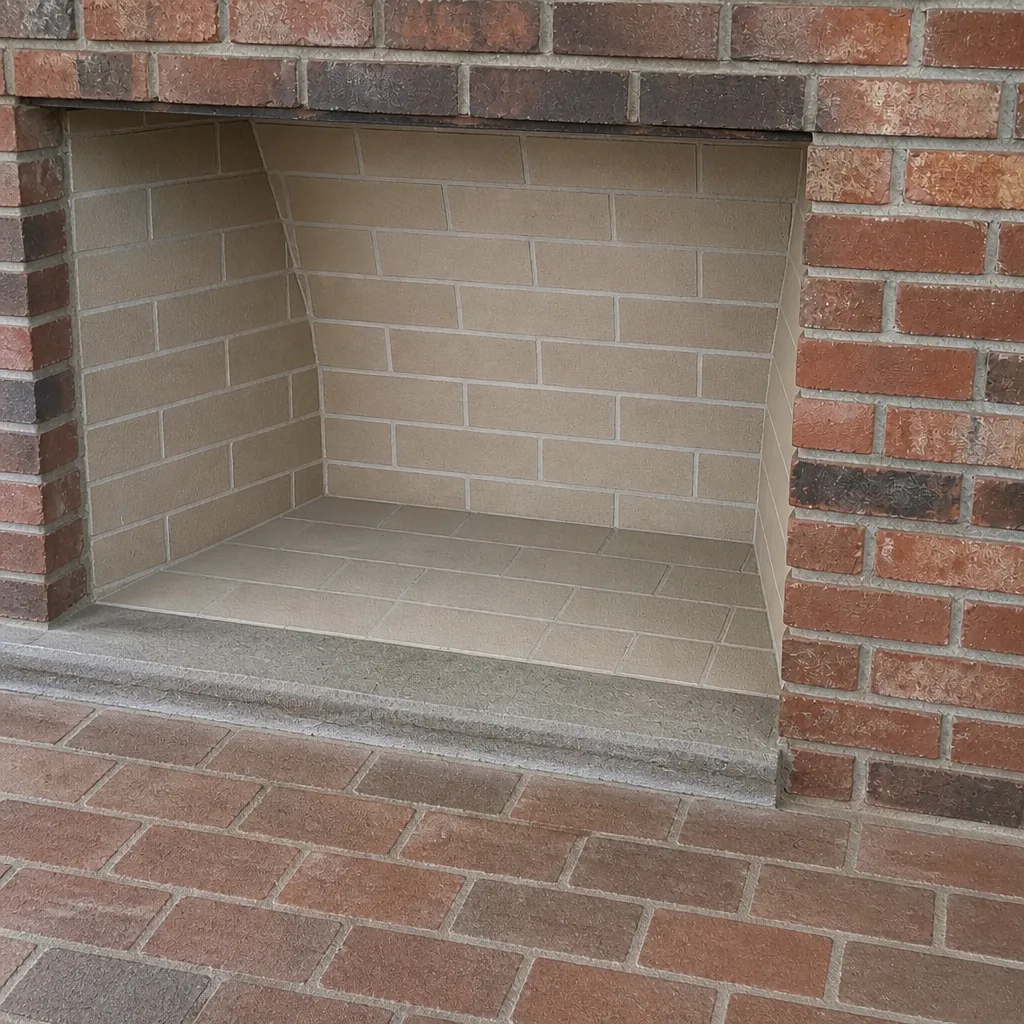
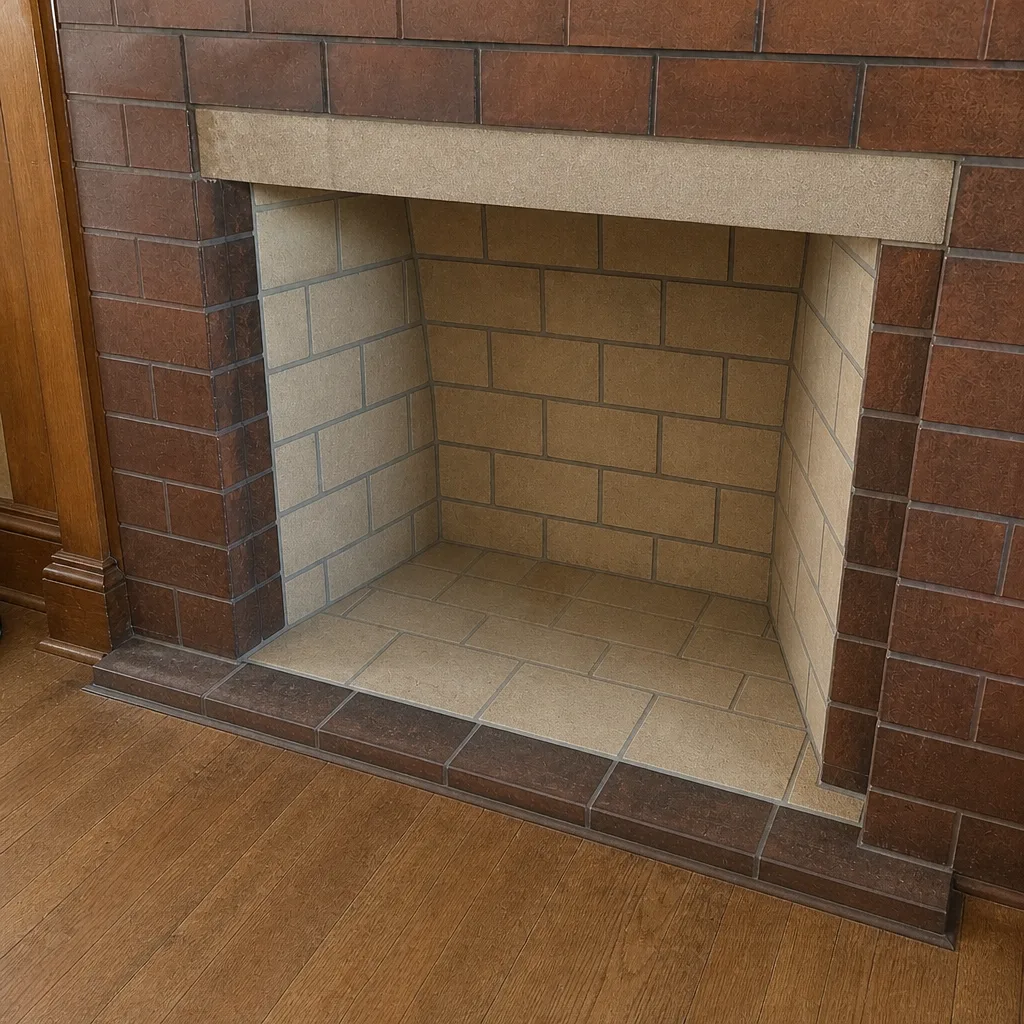
See the difference
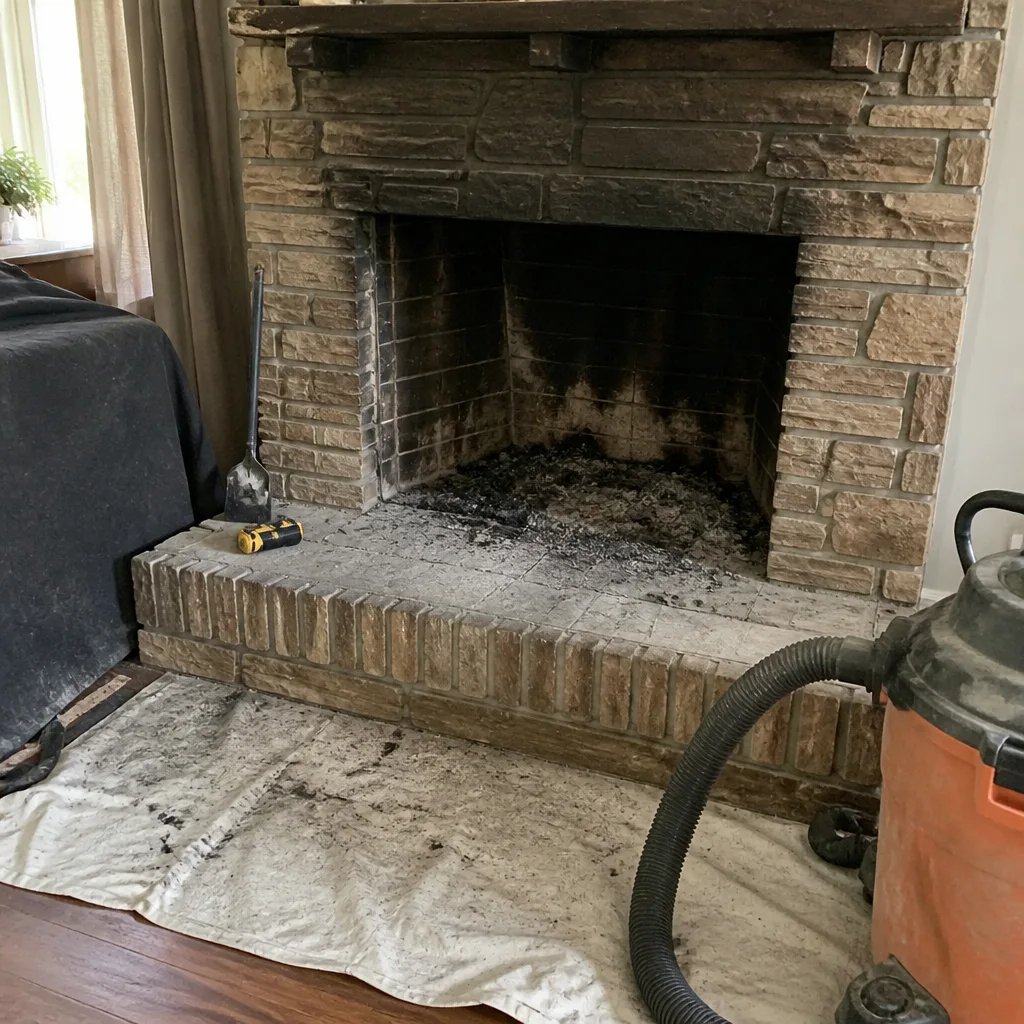 Before
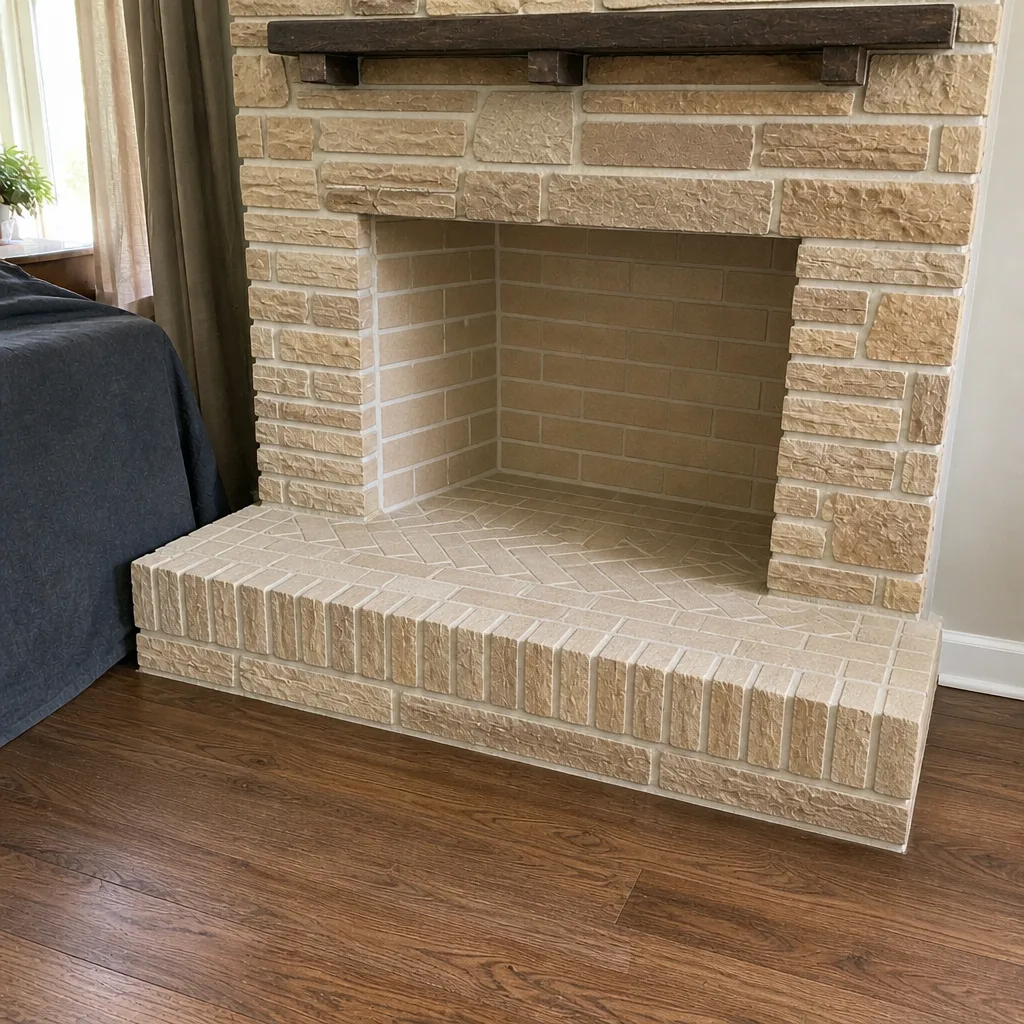 After
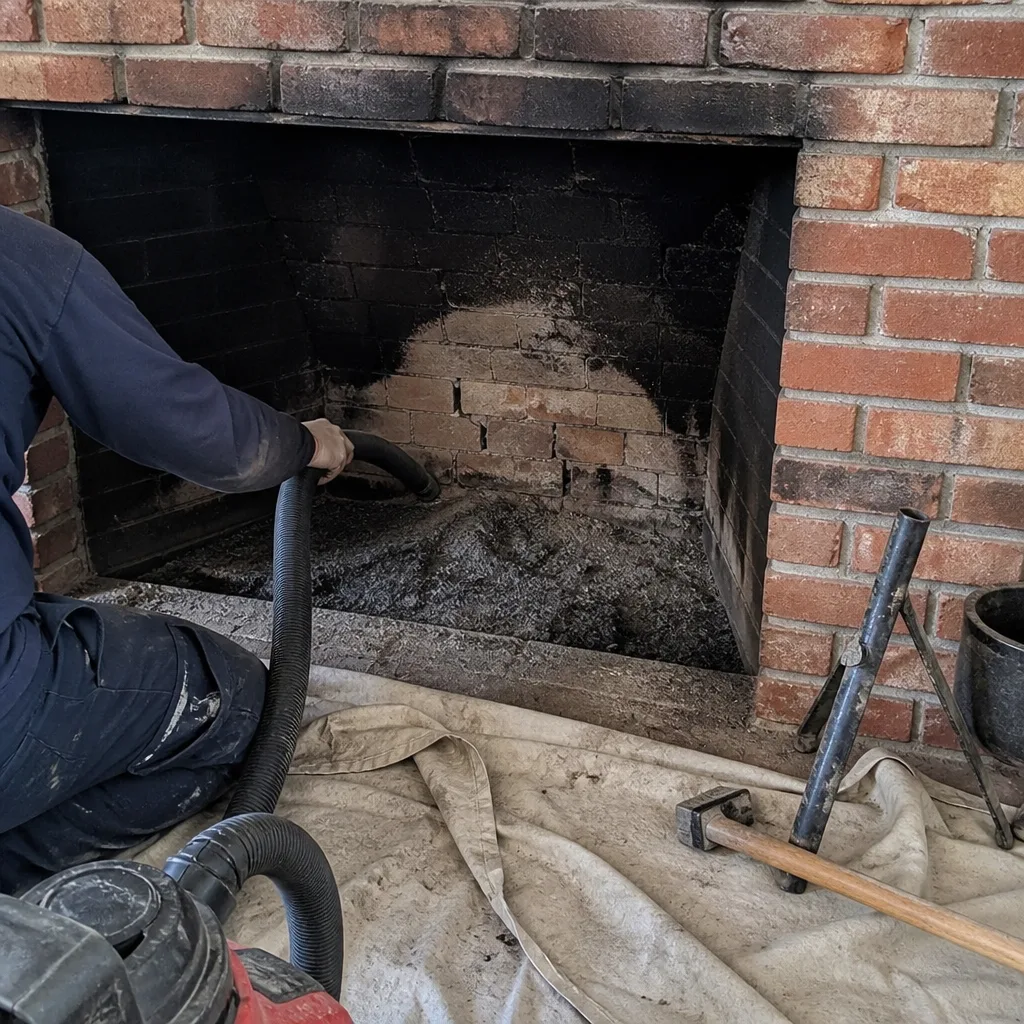 Before
 After
 Before
 After
When to Call a Professional
Call us when you notice any two warning signs at once, when a smell has persisted through a season, when creosote layers are visible or glossy, when a cracked crown or failing flashing is visibly present from the ground, or when a performance change has crept in and stayed. Call sooner if you suspect a prior chimney fire you couldn’t confirm, or if the flue hasn’t been inspected in more than a season of regular use. Glazed creosote and damaged liners are work for a trained technician, not a do-it-yourself project; the combustion byproducts and structural risks involved aren’t something to experiment with. Lakewood Chimney Sweep Co offers free estimates in Lakewood. Call (866) 937-7920 to get started. We answer 24/7. Fast dispatch from 7am to 7pm, Sunday through Friday.
Frequently Asked Questions
The most common are a campfire smell when no fire is burning, heavy or glossy deposits inside the flue, spalling firebrick, a rusted damper, smoke rolling into the room, and exterior clues like efflorescence or a cracked crown. Two or more together is your signal to book an inspection. Call (866) 937-7920 for an exact quote; estimates are free.
The general rule is once a year for homes with regular use, more often if you burn a lot of softwood or notice any warning signs. Lakewood’s dry climate and temperature swings cure creosote harder and faster than humid climates, so annual inspection is a reasonable baseline. Call (866) 937-7920 to schedule one.
Yes. A clean, empty firebox should barely smell. A persistent smoky smell on a warm day means creosote and soot are built up enough to off-gas into the home, and it’s one of the clearest signals a cleaning is due. Call (866) 937-7920 for a free estimate.
Often, yes. A flashlight on the firebox, a look at the exterior chimney with binoculars, and attention to smell and draft will catch most of the meaningful signs from the ground. The flue interior still needs a camera inspection to confirm. Call (866) 937-7920 to book one.
White, chalky staining is efflorescence, mineral salts pushed to the surface by moisture moving through the masonry. It means water is getting into the chimney, often from a cracked crown or failed flashing. On the firebox or the exterior combined with other clues, it’s worth an inspection. Call (866) 937-7920 for an estimate.
Glazed creosote, a cracked liner, spalling firebox brick, or a failing exterior crown all point to repair work beyond a standard sweep. Glazed deposits need mechanical removal and, often, HeatShield ceramic resurfacing to restore a sound flue interior. Call (866) 937-7920 to have it assessed.
The Bottom Line
The quietest chimney is not the safest one. The signs that matter most in Lakewood are the subtle ones: an off-season campfire smell, glossy deposits inside the flue, spalling firebrick, a rusty damper, a draft that slipped, and exterior clues like white staining, a cracked crown, or failing flashing. Taken one at a time they’re easy to explain away. Taken together they tell you clearly that the chimney needs attention now rather than next year. Our technicians have up to 11 years of experience across sweeping, inspection, fireplace repair, chimney repair, and cap and crown installation, and every sweep comes with a camera inspection and photo report so you can see the condition for yourself. Nothing is recommended without evidence you can look at, and we’ll tell you plainly when work can wait. One call covers every chimney service, from the firebox to the crown. Call (866) 937-7920 for a free estimate. We answer 24/7. Fast dispatch from 7am to 7pm, Sunday through Friday.
Written by the team at Lakewood Chimney Sweep Co.